
Root Stag – video
Video description
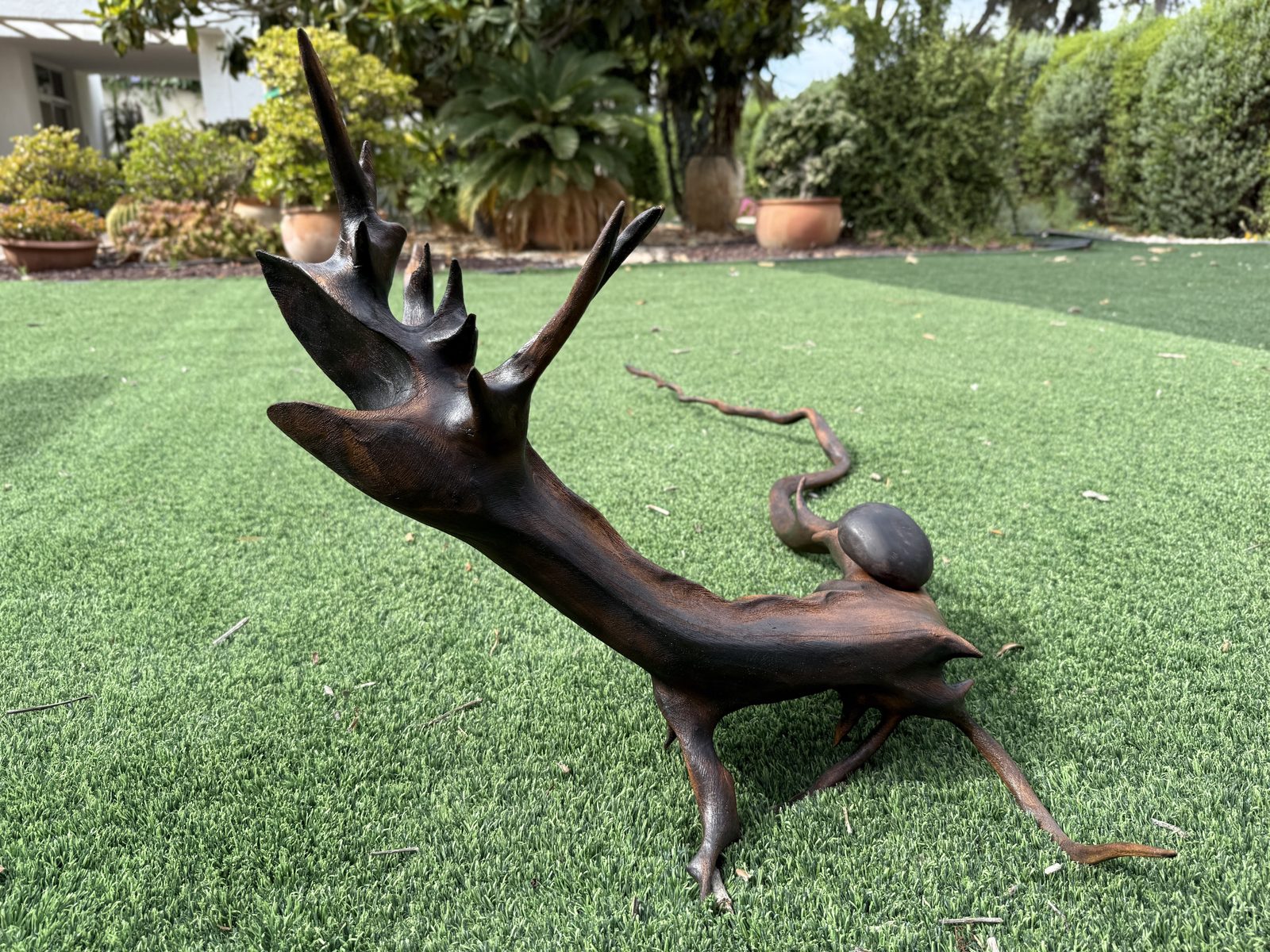
About 2 minutes 20 seconds, filmed handheld in sunlight: the camera circles the dark polished root sculpture lying on artificial grass, showing its crown of antler-like points, the round knob on its back and the long thin root tail, with close-ups of the polished wood. (no sound)
Watch the video in full quality (file MP4, 17 MB)
The main video plays automatically, on a loop and without sound. You can stop it at any time with the "Pause video" button or the player controls. If your device is set to "reduce motion", it will not start by itself.
Sculptures
Root Stag
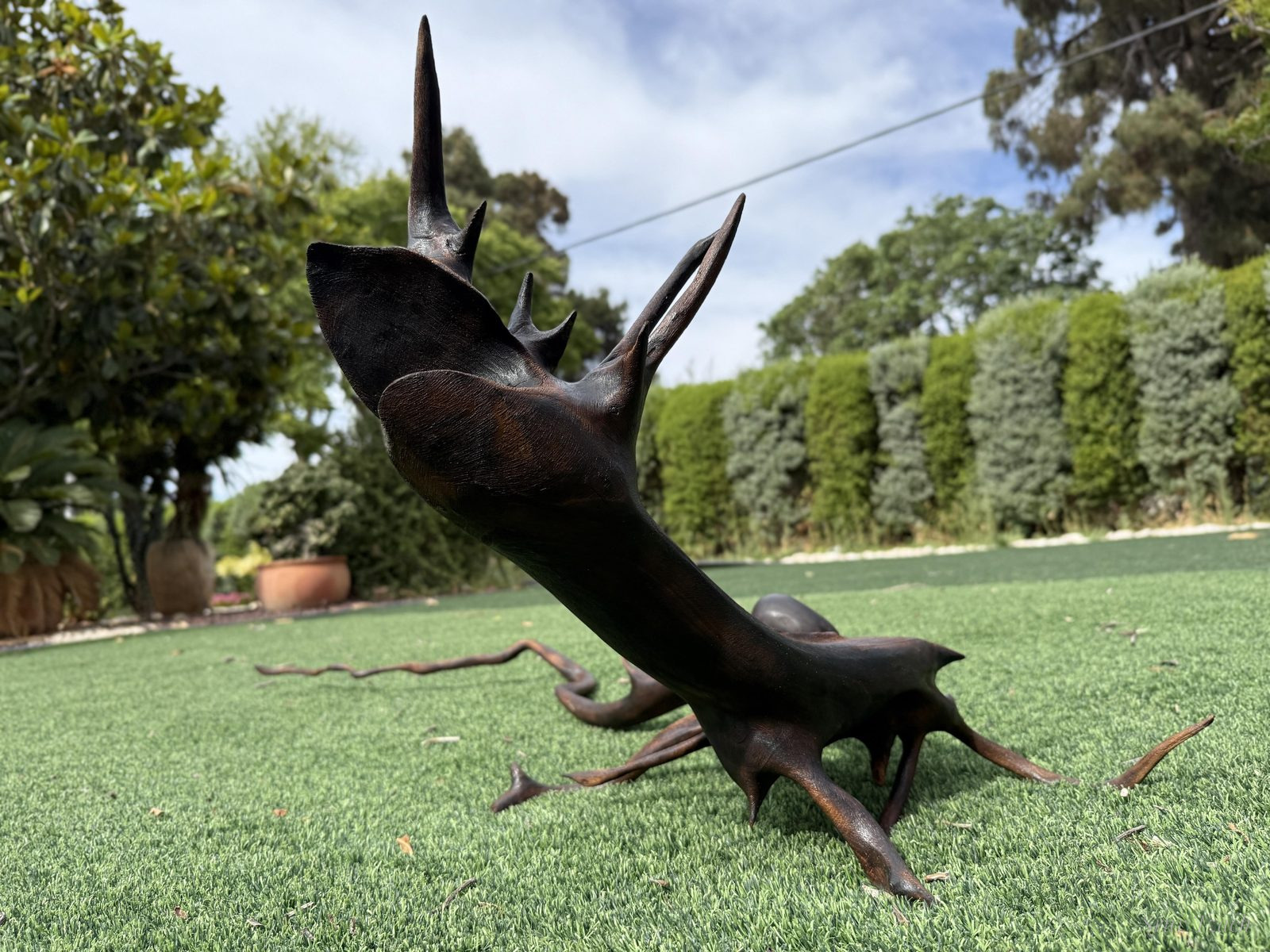
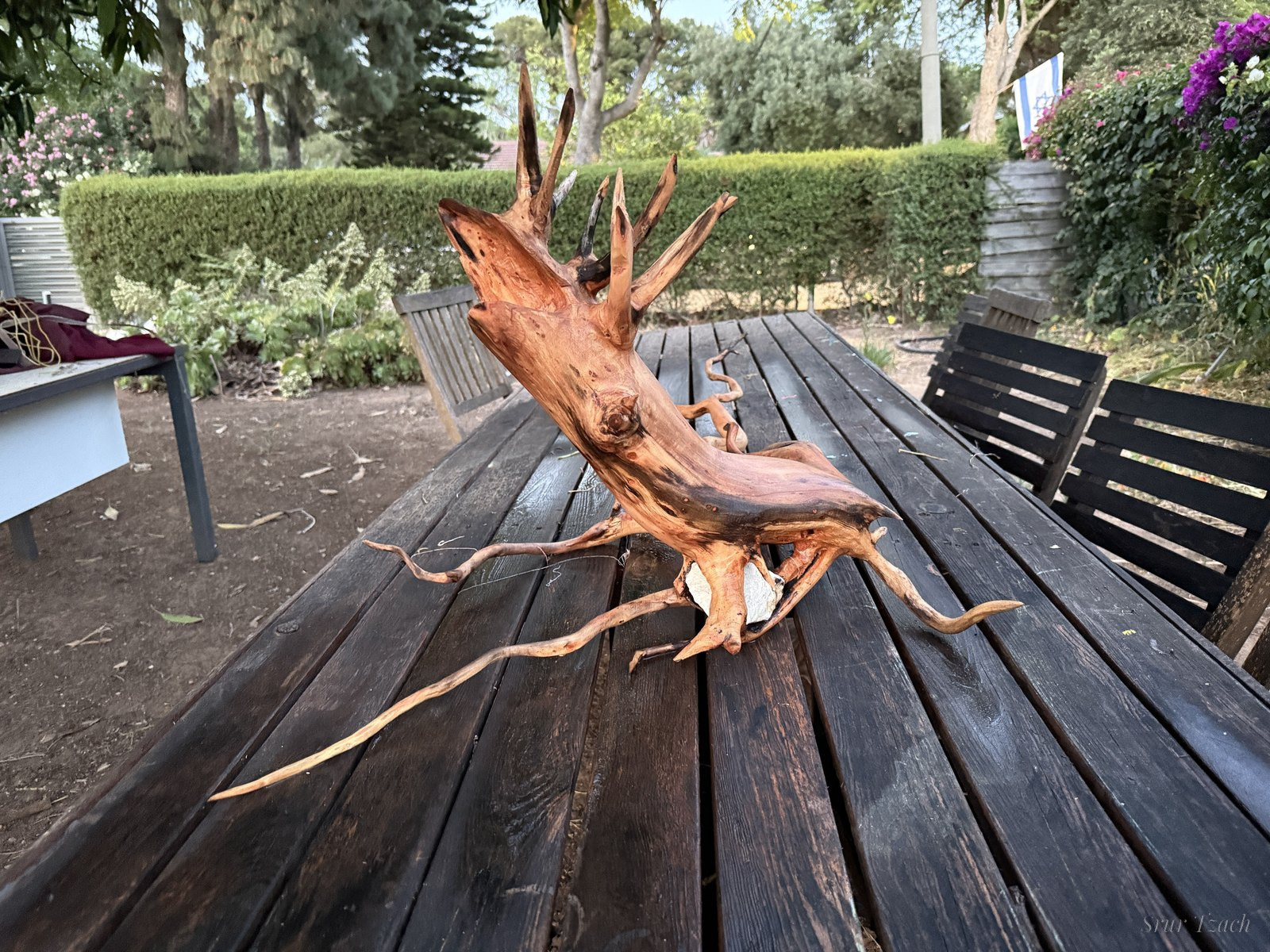
A dark, polished root that rears up to a crown of sharp points like a stag's antlers, with a small round knob and a long root tail behind. It is made of dry tamarisk wood found at the Sea of Galilee (Kinneret). What once lived underground now stands proud.
- Material
- Dry tamarisk wood found at the Sea of Galilee (Kinneret)
- Dimensions
- Length 2 m × height 1 m (200 × 100 cm)
3 photos · 1 video
Prices are not listed on the site. To ask about this work, please contact the artist.
Photos (3)
The raw material
This is how the material looked before it was worked into the sculpture.
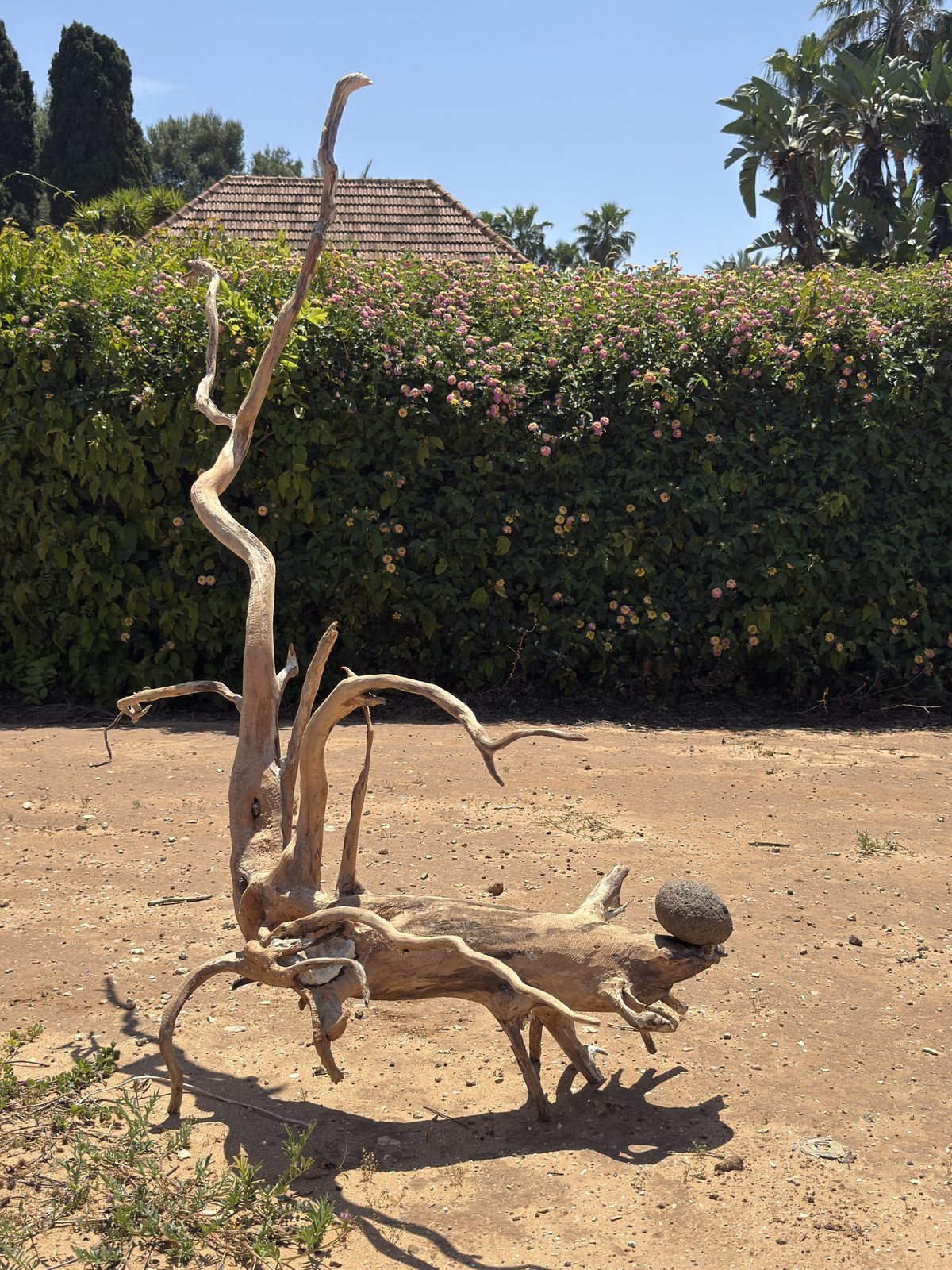
Root Stag – the raw material