
The artist
About Srur Tzach
Glass · Sculpture · Painting
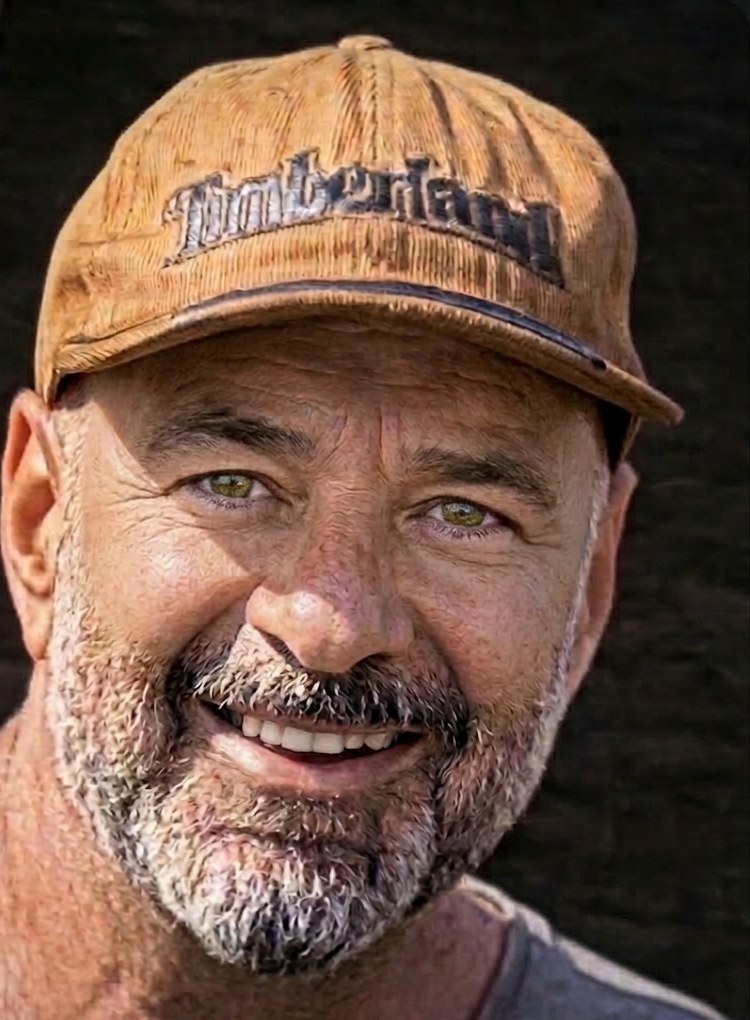
Srur Tzach is a multidisciplinary artist working in glass, wood and paint. Srur Tzach lives and works in his studio. He is a jewelry and industrial designer (MA, BA) and an international rafting and river rescue expert. He acquired his experience in glass art in Seattle, USA, a worldwide glassblowing center.
More about me
SafeRescue, a swift water rescue school. More about me there
Alongside the glass jewelry, Srur Tzach also creates sculptures – in wood, metal and mixed media – and colourful paintings.
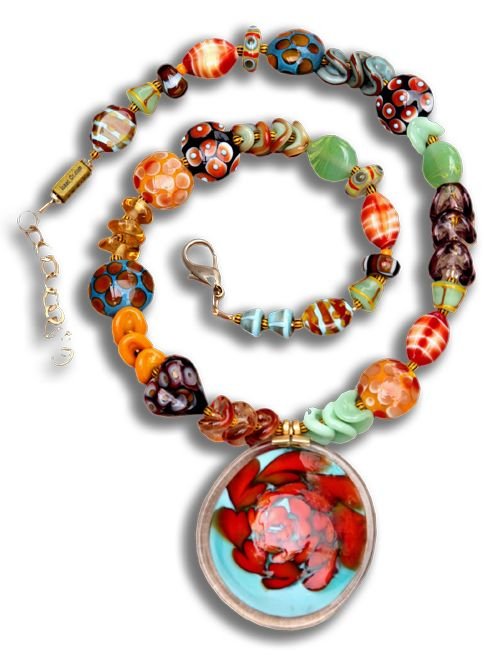
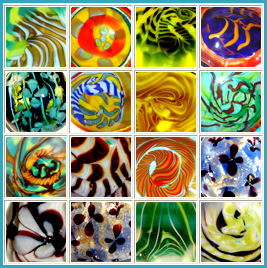
His glass jewelry is handmade. Each and every piece is designed in shape and color as part of the fusion process. Every piece is unique, numbered and signed by the artist. The raw material is Italian Murano glass in the form of colored rods, renowned for its high quality.
The process
The lampwork technique
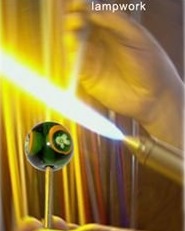
In lampwork the glass is shaped in the flame of a bench torch rather than in a large glassblowing furnace – close, precise work in which every bead or pendant is made individually.
Heating the glass rods
The work is done with the lampwork technique: colored Murano glass rods are melted in a torch flame at a temperature of 900 °C. The end of the rod is turned in the flame until the glass softens into a thick, honey-like liquid.
Winding and shaping
In this technique the soft glass is usually wound around a thin steel rod (a mandrel) coated with a release agent, and the rod is turned continuously so the form stays symmetrical. The molten glass is shaped with pressing, cutting and pulling tools.
Decorating with layers, dots and silver
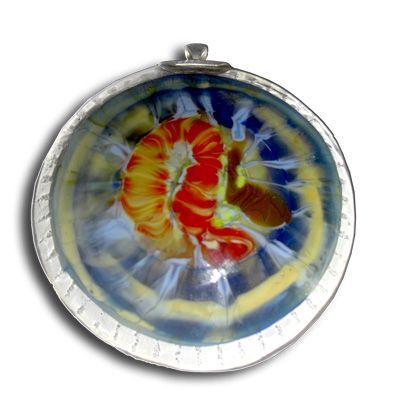
Layers of colored glass, dots and fine threads of glass – and sometimes silver – are added to the hot glass. This is not painting: the color lives in the glass itself, shaped and manipulated by the heat of the flame. The decoration can then be encased in a layer of clear glass that gives it depth, so the pattern seems to float inside the piece.
Annealing in the kiln
Once the design stage is complete, the piece is annealed in a special kiln and its temperature is reduced in a controlled way to room temperature, to avoid internal stress and strengthen it.
Every piece is inspected for quality and structural strength, and is unique and signed by the artist.
According to the Hebrew article "Seeing Through" (Ro'im Shakuf), a single bead takes from five minutes to more than two hours to make. It then goes into a kiln at 450 °C for about half an hour, and sometimes 12 hours pass before it can be strung.
Between rafting and beads
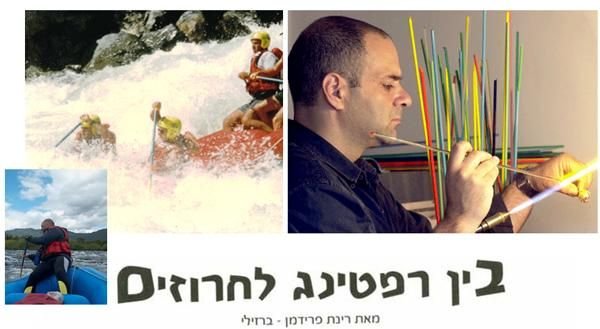
A translation of the Hebrew article.
It is a little hard to see the connection between rafting and beads. Not the beads of poetry, but glass beads. Rafting is a sport of water and currents: to survive you have to understand the different currents, use them and take advantage of them to steer the boat.
Hot-working glass, by contrast, is an action of fire and heat: molten glass that has to be restrained and controlled.
Glass has to be tamed; the river and its currents cannot be tamed – the river always wins. You have to join it and flow with it, not fight it. In both rafting and glassblowing there is great excitement, enthusiasm during the process, and the pleasure of movement.
Srur Tzach combines the two.
He was the one who first brought the sport of “white water” rafting to Israel in 1988, when the company “Jordan River Rafting” began to operate. Tzach and his partner brought the first boats into the country and established the field. Since then about a million people have passed through the company’s site.
Thirteen years later, in 2000, Tzach felt that something was missing. Day-to-day management of a site that had become a large, demanding business left no time for anything else.
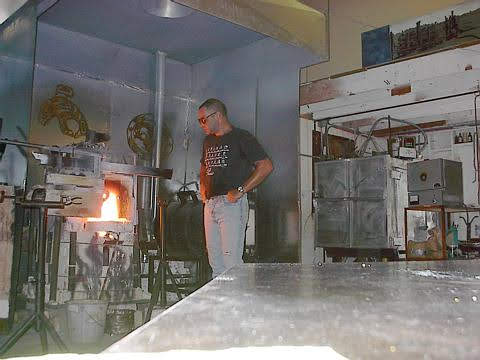
He decided to change his life and took a break, during which he travelled to India and, after a few months of yoga and meditation, reached Seattle in the United States, home of Chihuly, the world-famous glassblower. Seattle, with 6,000 glassblowers and hundreds of glass galleries, is a world centre of glassblowing, second only to Italy. The city breathes and lives glass. For the next six months he concentrated entirely on glass, its different states and the various techniques of working it with heat.
Tzach: “As they say in Seattle, ‘glass is 100 times more addictive than heroin.’ I don’t know about heroin, but glass really is addictive. I became addicted to the process and to this material – transparent, rigid and liquid, with its amazing colors and the contrasts between them.” The working process, carried out at 900 degrees Celsius and above, is astonishing in its beauty and almost magical. During it the glass changes from a solid into a liquid that looks like boiling honey, and its color turns glowing red. Blowing requires great skill and technique. A painter or a sculptor can stop at any stage of the work, think, rest and enjoy what they have made; in glassblowing there is no idle moment, no breaks and no “just a second” – if the piece is too hot it immediately runs and smears, if it is too cold it simply breaks. Every second counts and the timing is precise to the second; the whole process is done while the blowing rod is turned continuously on its axis.
When the design of the glass object is finished, the artist loses contact with it, because it is placed in a kiln to cool in a controlled way, a process that preserves the strength of the glass.
This difficult loss is one of the addictive aspects of working with glass. In fact, after hours of work in the hot process the artist cannot enjoy what his hands have made: the glass object is hot and glowing, you cannot touch or feel the glass, the colors are not the true ones, and you cannot take in the transparency of the glass. At this stage he has to part from the piece for many hours, without being able to look at it or handle it. The glass object is put into a kiln at a high temperature that evens out the heat through every part of the piece; from there the temperature is lowered in a controlled way until it reaches room temperature.
Usually only the next day can the piece be taken out and enjoyed, once it has cooled.
Tzach adds that “there is no way to describe the anticipation of that moment of surprise when you open the kiln and the glass is revealed for the first time in all its glory, in its transparency and its colors. The creation of a material as noble as glass.”
Today he divides his life between his love of glass and making Murano glass jewelry in the studio, and the professional training of rescue units in swift-water rescue and rafting.
The jewelry is handmade; each and every bead is shaped to its final form and its various colors in a process of melting. Every piece is unique, numbered and signed by the artist. The raw material is Italian Murano glass, known for its quality.
Throughout history, glass has fascinated people with its special qualities. The properties of transparency and clarity, together with hardness, led them to attribute mystical powers to glass (the crystal ball).
Glass beads served as a means of personal and religious expression, as jewelry, as a charm against evil spirits, and even as currency.
"It is a jewel that shines... it has the beauty of a diamond, but it is not as expensive."
In the press
- "Seeing Through" (Hebrew) – טלי חרותי-סובר (Tali Heruti-Sover).
- "Between Rafting and Beads" (Hebrew) – רינת פרידמן-ברזילי (Rinat Friedman-Barzilai).